Turning On Website Energy Saving Mode
A look at how brands are embracing digital sustainability with website design to reduce their carbon footprint.

Oops! We could not locate your form.
A look at how brands are embracing digital sustainability with website design to reduce their carbon footprint.
Sustainability has become something that nearly every brand is striving for, and so they should be. The movement of businesses being more socially aware of the environmental impact of what they do is hugely important when it’s not just performative.
Whether it’s the energy they use, where they source materials from, their manufacturing process, or delivery and logistics, brands are becoming more conscious about the carbon they use and create with the businesses they run.
Digital sustainability is something that is fast becoming a more widely discussed subject, as marketers discover that the internet and all its servers are the 7th largest producer of CO2 worldwide. That’s when compared to countries with the highest carbon emissions.
Being that the internet is always on and there at the click of a mouse or a tap of a finger, there are no weekends or days off, which has environmental consequences.
Some businesses are now taking action and making digital sustainability a greater focus. Some plant trees, whilst others make energy saving changes.
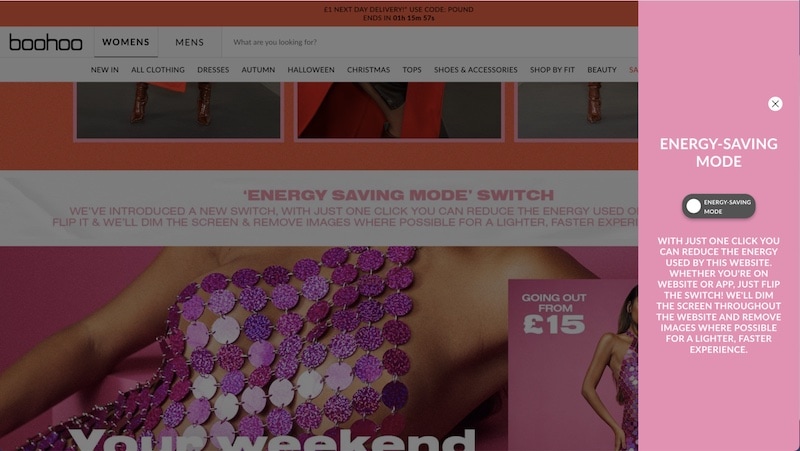
BooHoo is focusing on becoming more sustainable and has recently introduced an energy-saving mode to its website.

Across their website, BooHoo have introduced an energy-saving mode, which claims it will remove unnecessary imagery and dim the brightness of the screen in a bid to reduce the amount of energy used to serve their website, for a lighter, faster experience.
Ultimately, the more imagery you have and the size of the files, can slow down your website and put more strain on the resources involved, that in turn draw more power and emit more carbon.
Reducing the brightness can use less power in the same way your phone might dim the brightness of the screen when your battery is getting low.
So in theory they are reducing their carbon output. Whether this is seen as useful, or just a novelty by sustainability folk is another matter.
As ‘necessary’ images on an eCommerce website are practically all of them, it was hard to find examples. I did find one image that was replaced, so this could be rolling out further as a write this.

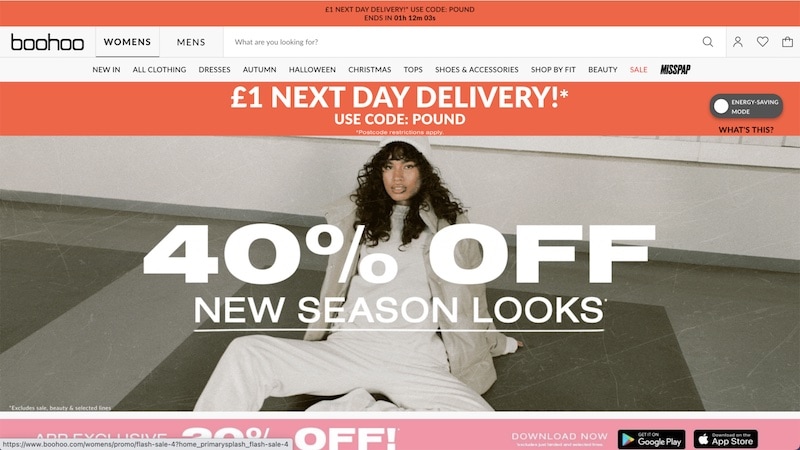
Above, you can see a 40% off sale banner image before the energy-saving mode is turned on.

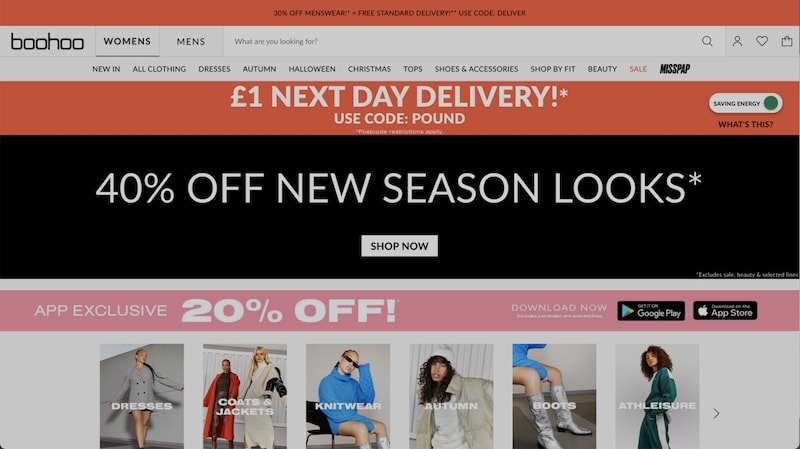
After the energy-saving mode is switched on, you can see that the sale banner has the photo replaced with a simple black background and white text. This works on the basis that white actually requires more power than black on some screens.
If you are wondering if this is an easy button to add to any website, then sorry to disappoint you, but it isn’t super straightforward. At least not yet, but like the many accessibility plugins on the market today, I’d be surprised if an energy-saving mode plugin is not created soon.
There is some legwork to do here with setting which images are to be priority and delivering suitable text-based fallbacks for images that will be replaced. But with some planning, it can be pulled off. As we always say at Impact, anything is possible with the right budget and timeline.
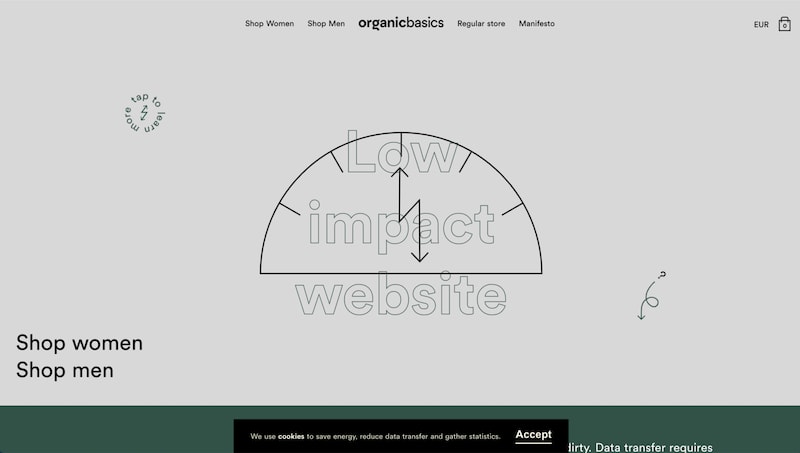
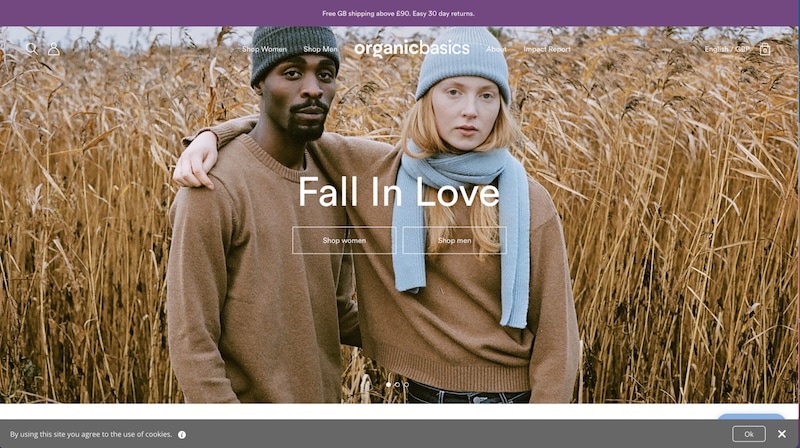
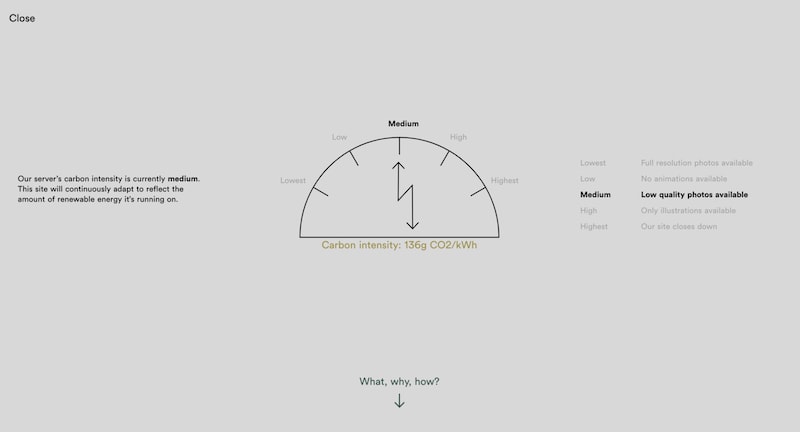
Now that you mention it, yes, take a look at Organic Basics. Their website continuously adapts the theme to provide fewer graphics to ensure that it uses less of its renewable energy.
Here is the low impact version of the website:

Below is the regular store in all its beauty.

Here are the details on how their low-impact version works.

With sustainability becoming a greater focus for brands daily, what could your business or website be doing to help reduce your carbon footprint?
You could implement practical ways of showing your users that they are directly helping like BooHoo have, by creating an alternate theme that displays fewer graphics or dims the screen. Or you could simply focus on reducing the page weight of your site, by compressing images to be the smallest they can be and ensuring your website loads as fast as it can. This will also help without the performative aspect.
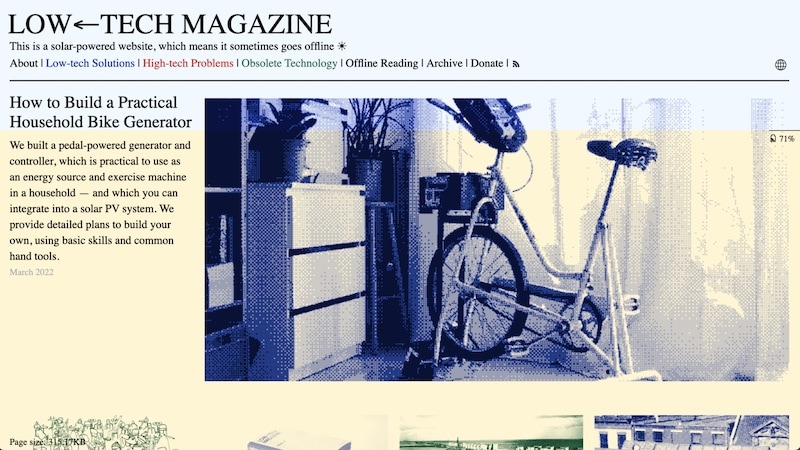
I can’t end this post without giving a mention to Low Tech Magazine, which runs its website powered 100% by solar panels. On dark days without much sunshine, it occasionally goes offline, but I love it and some of the tactics shared are brilliant.
I see a future of exercise bikes in the house and treadmills that are generating power for our household batteries.

Did you know, that all the websites we host, are hosted on green servers powered by 100% renewable energy, which have been since before 2017? That includes our website too.
In 2019 we went fully remote as a business, removing the daily commute for our employees and removing the need for a permanent office space. 99% of our meetings are online, removing nearly all business travel.
We also encourage our employees to practice digital hygiene, by regularly deleting old and unused files.
That’s a wrap for Swipe & Deploy #15 Join me next week when I’ll share another insight or piece of inspiration from around the web.

If you’d like to learn more about our WordPress & WooCommerce Support & Maintenance plans, drop us an email or give James a call.
Our plans provide a holistic solution to your website’s performance, reliability and security, and are inclusive of premium tools and services.
Could adding verification by industry experts help build trust with your users, in a world where so much content is AI slop?
James Coates
A recent addition to the Oh Polly website went viral, and prompted this week's Swipe & Deploy. Could your brand take inspiration from Oh Polly for your own website?
James Coates
A look at how adding functionality for users to save their basket can remove friction and improve your chances of a sale.
James Coates