Why Saving A Basket Can Save A Sale
A look at how adding functionality for users to save their basket can remove friction and improve your chances of a sale.
Oops! We could not locate your form.
A look at how adding functionality for users to save their basket can remove friction and improve your chances of a sale.
Retail therapy rocks! Maybe because I spend my life planning, designing or auditing websites, I’m a little bit obsessed with spending money online. Whatever it is I’m buying, I love buying it online.
With a recent house refurb I had planned all of the details, from the flooring to the screws. So when I was budgeting, I was generating quotes, or more frequently in this case, adding my products to a basket to get a total.
When shopping around for insurance, you can pop on Compare The Market or U Switch to see a huge range of insurance quotes. But when you’re buying 25m of flooring, the only real way of getting a good idea of what you need to budget and where you’ll get the best value, is by visiting various online retailers and adding all the products to the basket on each to get totals.
The downside to this, is that many of these baskets expire. Vamoose! You’ve carefully curated a basket, and whilst you were in another tab, the website emptied it.
To improvise, I had Evernote open, and I was pasting screenshots and writing notes, to work out similar styles and total costs of the flooring needed. However, one website saved me this trouble because they let me save the basket.
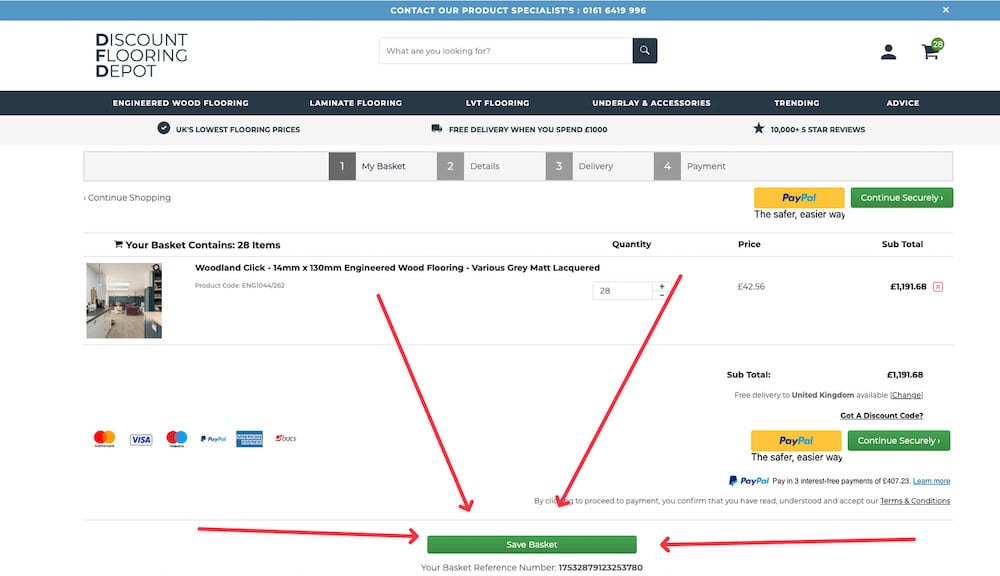
Shown below is the flooring website Discount Flooring Depot (Link included if you’d like to check them out). The image is a basket I’ve made up for this post, but at the time I had underlay, flooring and all the accessories I needed for my project, so there was a lot more work involved than just finding and adding one product.

Everyone always wants to push the sale, but people won’t buy until they’re ready. Often, in a scenario like this it is because it’s the sensible thing to do. For me it was because I had nowhere to store this flooring if it was delivered quickly, and it wasn’t going to be fitted for a few weeks.
Unless there was a BIG discount, I wasn’t going to be purchasing immediately, so I was in limbo about who I was going to buy from. DFD at least gave me the option to save my basket and return later, which meant I wouldn’t have to hunt everything out again when the time came.
Nope! The website did give me the option to register, but at that stage I wasn’t 100% sure I was choosing them. Requiring signup, although it builds your email list, adds friction. Sharing a unique basket reference number, like DFD did, I remain anonymous but can return to purchase at my leisure.
I did end up ordering my flooring from DFD, and being able to open the basket I’d already created when researching provided less friction for the sale. No having to find all the products again and adding the right number of items to my basket.
This is such a simple, yet extremely effective add on to a standard eCommerce website. However, a lot of the time it would be a feature that is overlooked as it might not be utilised that often, depending on the type of products being sold.
The more complex or configurable the products are, the more this becomes a big benefit. Saving the user from repeating a laborious chore.
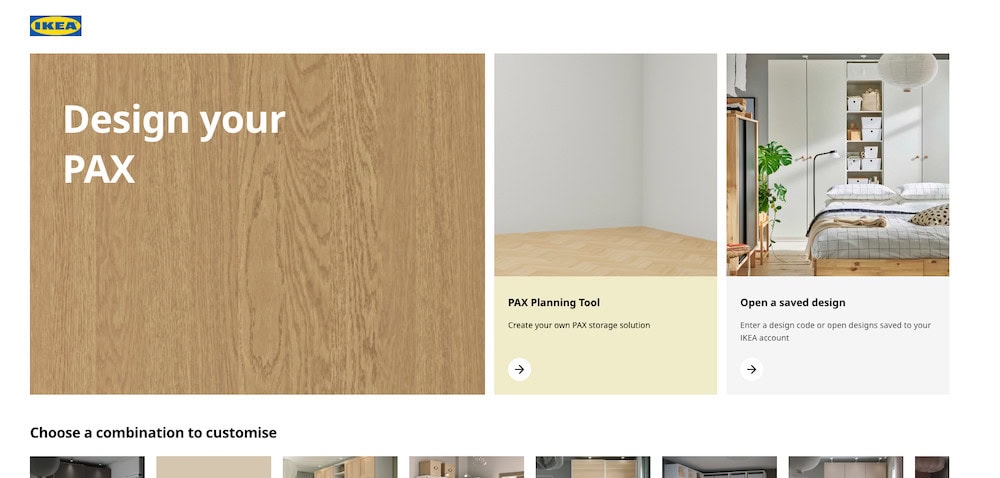
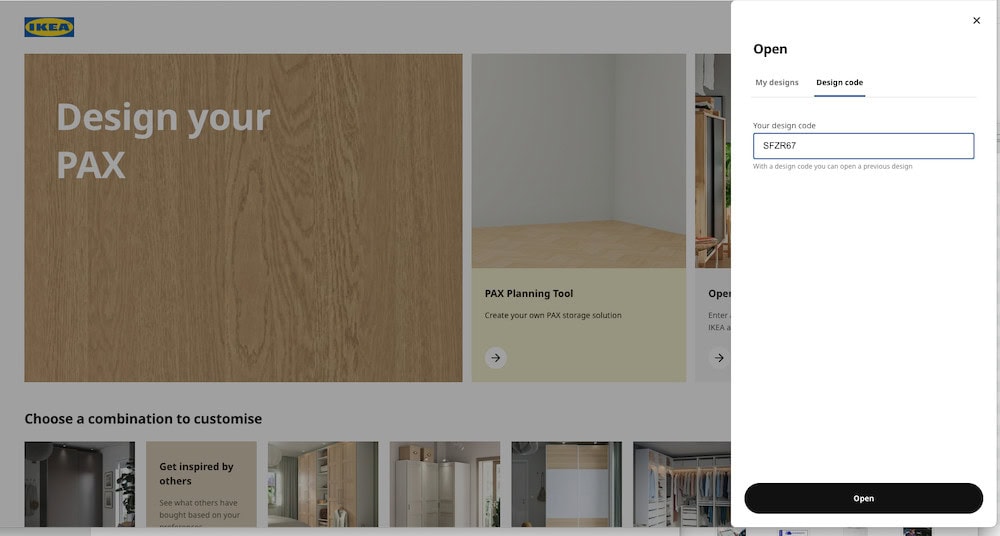
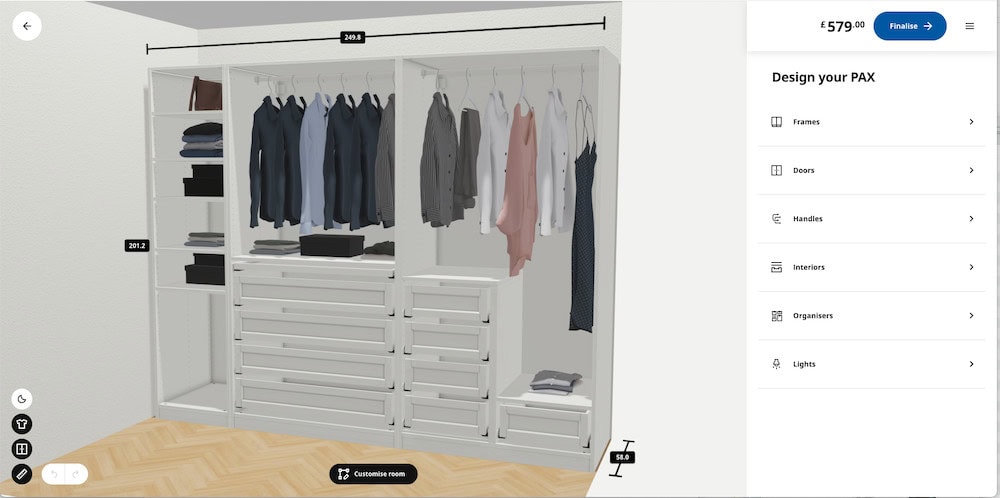
IKEA have a similar feature for their customisable Pax Wardrobes, although for this one you are logged in. When creating your design, you can save it to return to later, or share it without login for others to see (something I was doing often to get my wife’s approval.)


Another great example of being able to save a basket, is if someone else is creating the basket for you, so that you can pay.
My wife does this typically if she wants to scope something or ‘ensure it’s right’ is usually how she phrases it. But a benefit of sharing is that it allows for couples or friends to pay for baskets they’ve not created.
Another scenario where I can see this being useful is where, for example, a mum is sitting in the car park waiting to pick her child up from school. She browses and adds products she needs to a basket, but realises her card is not with her, so she can’t checkout. By having the ability to save or share the basket, she can either check out when she finds her card, or even on another device when she’s back home.
On B2B websites, ‘saving a basket’ is typically obtaining a quote that can be returned to later. It’s basically the same thing, but approached in a different way. The main advantage of having quote saving functionality, is that you can place an expiry and take the visitor’s details, which can certainly trump the basket code.
If you’re selling online, your customers wont necessarily have a linear sales journey. They might be busy parents, get distracted midway through adding products, or not be on the right device or carrying their payment card.
Taking away the friction point of having to add the products again, can also reduce the likelihood or opportunity for the visitor to shop around.
Whether you choose to request an account creation or share a basket code, there are many benefits to saving and sharing a basket for a big win.
This is not only for marketers with eCommerce websites. By being on the look out for websites with basket saving and sharing, knowing the benefits of basket sharing might save you time when you are configuring products or comparing website prices.
That’s a wrap for Swipe & Deploy 072 this week. Join me next time where I will share another insight or inspiration piece from around the web.

If you’d like to learn more about our WordPress & WooCommerce Support & Maintenance plans, drop us an email or give James a call.
Our plans provide a holistic solution to your website’s performance, reliability and security, and are inclusive of premium tools and services.
Could adding verification by industry experts help build trust with your users, in a world where so much content is AI slop?
James Coates
A recent addition to the Oh Polly website went viral, and prompted this week's Swipe & Deploy. Could your brand take inspiration from Oh Polly for your own website?
James Coates
Tips on how product imagery can influence and improve the online shopping experience and customer perception.
James Coates