Human Checked Articles – When Getting Content Right Is Critical
Could adding verification by industry experts help build trust with your users, in a world where so much content is AI slop?
Oops! We could not locate your form.
Could adding verification by industry experts help build trust with your users, in a world where so much content is AI slop?
“Seeing is believing” is an old saying that is no longer true. In the past few years so much has changed drastically with the evolution of AI imagery and video, where now you have to stop to think, is this actually real?
We seem to question this more and it doesn’t stop at video or imagery, but content written is far more questionable, knowing that much is produced by AI tools.
AI tools seem to get quite a lot wrong at the moment, and can even fabricate stories to fill gaps, so how can we truly believe what we read any more?
For many businesses, blog content or stories wouldn’t cause any drama if a few facts were skewed, but for those in healthcare or industries with strong compliance requirements, publishing incorrect information could be costly.
I was camping a few weeks ago, and my son loves an early morning walk. One morning we were walking past a dancing rabbit, “Dad, video this it’s really funny”.
I started to record and then realised, this bunny wasn’t very well.
After reporting the rabbit to the warden, she told us that the rabbit has “Myxie” (myxomatosis) a viral disease that only affects rabbits but can be fatal, especially for wild rabbits with no vets.
Curious as I am, I turned to Google, and in doing my research, I learned about the disease from the Blue Cross website.
Now, the information they provide really needs to be true, as some of it relates to advice they are giving people regarding pets, animal welfare and vaccinations.
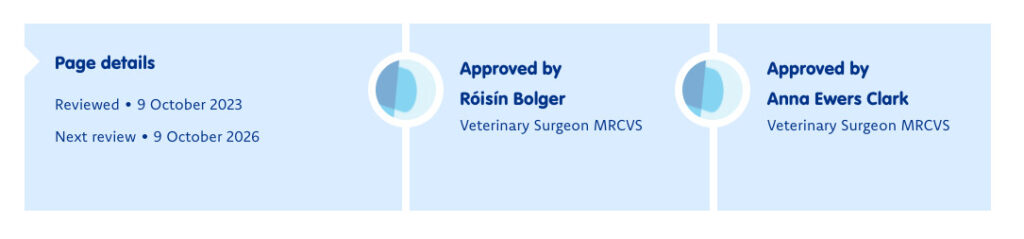
They achieve this, by having this information fact checked by 2 independent experts, both listed as veterinary surgeons. You’d like to know they know their stuff!
Providing proof or evidence of a verification process provides reassurance and trust that what you’re reading is actually truthful!

Content being truthful does not just have to be believed by humans. Search engines like Google need to believe that the information they are surfacing in the SERP is accurate too, as they want to provide users with the best possible results.
Creating reliable content that also includes authoritative experience from key personnel, builds more trust. Rubber stamping it by another key professional ticks more boxes. Like a peer reviewed research paper.

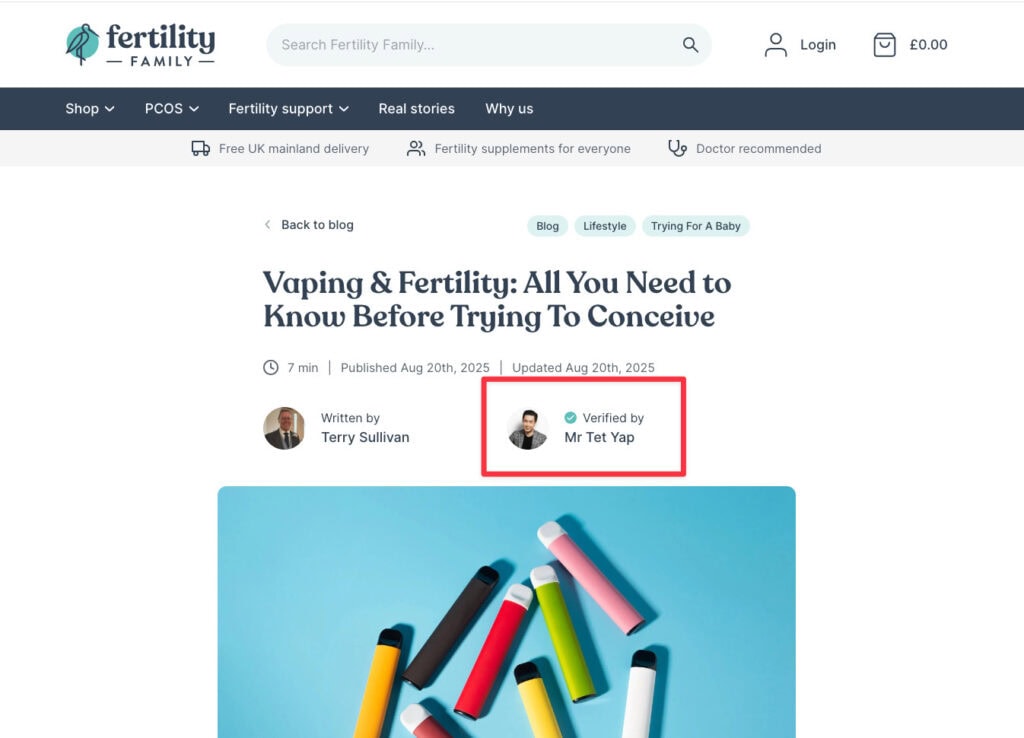
Shown above is a website Impact built for Fertility Family. Highlighted in red is a feature we added for their team, which allows their blog content to display a ‘verified by’ label with a check mark. With their work in fertility, they are seen as a respected voice and can’t risk incorrect information being presented. So they invest in their content being verified by experts in the fertility field.
Each author has a link to their own page which provides an overview on their experience and why you should trust their verification, and their work is cited in places across the internet.
Google likes this, as do website visitors, because it is a step against fictitious information, and the visitor feels they can trust the company. This is a massive step, for any brand.
You may not be in a heavily regulated industry, but you will know if your competitors are publishing false information. Whilst you play by the rules, they maybe bending them like Neo’s spoon.
To take matters into your own hands, you could look to verify the advice and content shared on your website by independent or 3rd party experts. Even if it’s not required, you can be seen to do this first.
This approach could boost reputation whilst helping your industry remove false information.
Sometimes the simple wins are not that complicated, but the process and time it takes to seek out these people could be lengthly. Is the risk worth the reward?
In terms of implementation, my team at Impact can assist in delivering this work for you and provide the strategy and various pages required for this author or validation journey. Feel free to reach out to ask more info.
I feel that more brands will be introducing this kind of content verification in the quest to at least appear like the content they’re sharing is legitimate.
This article was written by a human, me. I enjoy writing these, so I try to avoid using AI for writing any area of it. I verify that what I have written is from first hand experience, including the dancing rabbit.
I did use Claude for ideas around the headline, which I then wrote myself anyway, so it probably would have been more ‘catchy’ if Claude wrote it, but where’s the fun in that?
That’s a wrap for Swipe & Deploy 074 this week. Join me next time where I will share another insight or inspiration piece from around the web.

If you’d like to learn more about our WordPress & WooCommerce Support & Maintenance plans, drop us an email or give James a call.
Our plans provide a holistic solution to your website’s performance, reliability and security, and are inclusive of premium tools and services.
A recent addition to the Oh Polly website went viral, and prompted this week's Swipe & Deploy. Could your brand take inspiration from Oh Polly for your own website?
James Coates
A look at how adding functionality for users to save their basket can remove friction and improve your chances of a sale.
James Coates
Tips on how product imagery can influence and improve the online shopping experience and customer perception.
James Coates