Why Multi-Language Websites Matter For The Hospitality Industry
A look at the importance of multi-language websites for hospitality sector brands wanting to expand their global audience.

Oops! We could not locate your form.
A look at the importance of multi-language websites for hospitality sector brands wanting to expand their global audience.
Language can be one of the major barriers to this. Both from a user perspective, and a search perspective.
Travellers looking to access information and make bookings for their trips prefer, and in many cases, expect to access information in their native language.
For hospitality businesses, like hotels, tourist attractions, and restaurants, that want to attract more international visitors, having a multi-language website is a necessity.
Offering a seamless multi-language experience can significantly improve user experience, build trust, and ultimately drive more bookings.
Here’s why a multi-language website is essential for hospitality businesses looking to grow their international customer base, and how you can go about implementing multilingual functionality effectively in WordPress.
Travellers from all over the world are increasingly exploring destinations outside their home countries. A multi-language website allows you to connect with international guests, opening the door to new markets and increasing your global visibility.
When potential guests can browse your website in their preferred language, it creates a frictionless experience. Guests are more likely to book when they fully understand your offerings, policies, and special deals.
Language barriers can deter guests from making a reservation. Providing information in their native language signals that you value their business and are committed to meeting their needs.
A clear, accessible website in multiple languages can reduce reliance on third-party booking platforms. By enhancing the user experience, you’ll encourage more direct bookings, saving on commission fees.
Platforms like WordPress offer powerful tools to create and manage multi-language websites. Plugins such as WPML or Weglot make it easy to translate content, switch between languages, and maintain consistency across your site.
Make it simple for users to switch between languages by adding a language selector. This can be a dropdown menu, flags, or language codes prominently placed in your website header. Alternatively, you can detect a user’s location and offer them the option of choosing local language versions.
4. Choose Languages That Align With Your Existing And Target Markets
You don’t have to add functionality for every language under the sun. Depending on your target audience, your existing customer base, and what your analytics reveal about your current website audience, you can select and implement the languages that make most sense.
The languages or localised versions you choose to add will depend on your business and goals, but the point is that you don’t have to invest in adding every single language. You could start with one and gradually add more, as and when you need to.
To maximise your website’s reach, optimise for international SEO:
Translation is just one part of the puzzle. Cultural relevance is equally important. Adapt your imagery, colours, and messaging to align with the preferences of your target audience. For example, avoid using imagery or phrases that may not resonate, or could potentially even offend certain cultures.
Test your website in each language to ensure that:
Users are far more likely to book a stay or reserve a table when they feel confident they understand the details. A multi-language website removes barriers that might otherwise lead to abandonment.
Guests appreciate the extra effort of offering information in their language. This positive experience often leads to better reviews and repeat business.
In a crowded hospitality market, a well-designed multi-language website helps you stand out from competitors who only offer content in a single language.
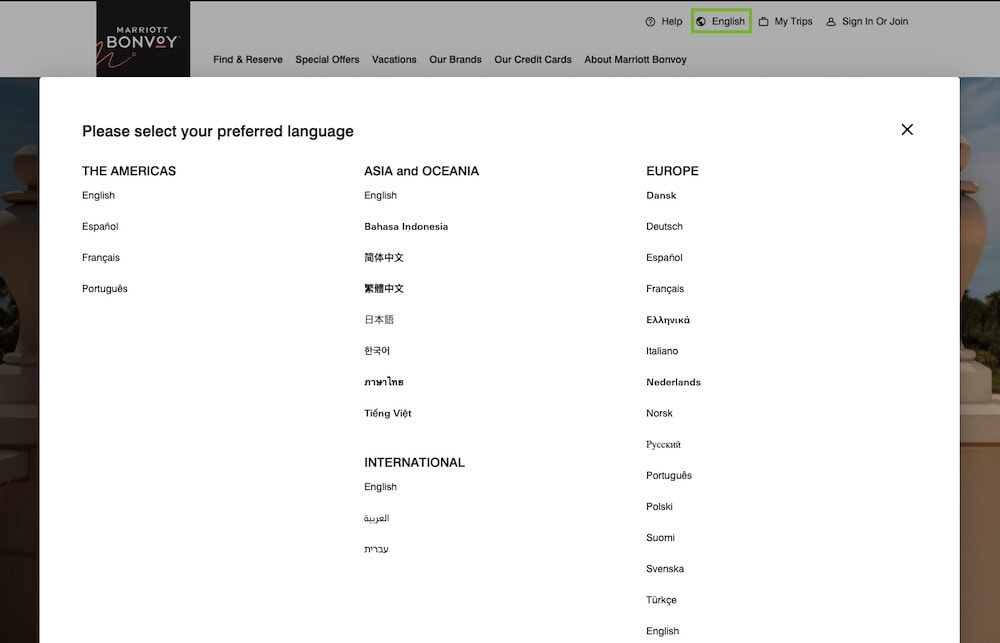
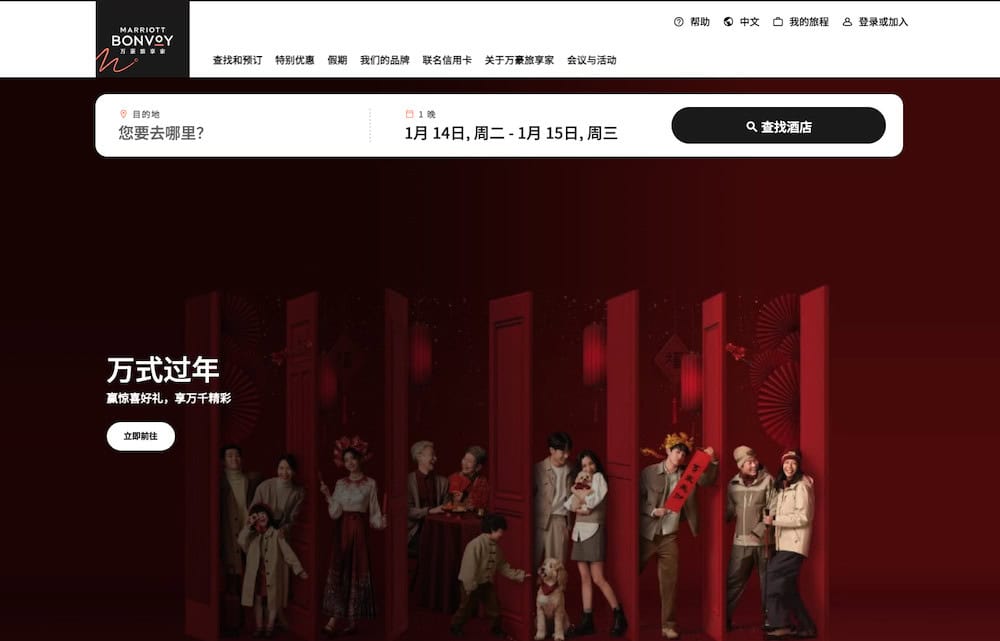
Marriott’s website supports multiple languages and offers localised content and imagery for different countries and regions.

Their language-switching is accessed via a dropdown, and makes it easy for global travellers to book with confidence, on a localised version of their site.

Users can view and book Marriott’s hotels, which are located across the globe, comfortably, in their own language.
2. Historic Royal Palaces
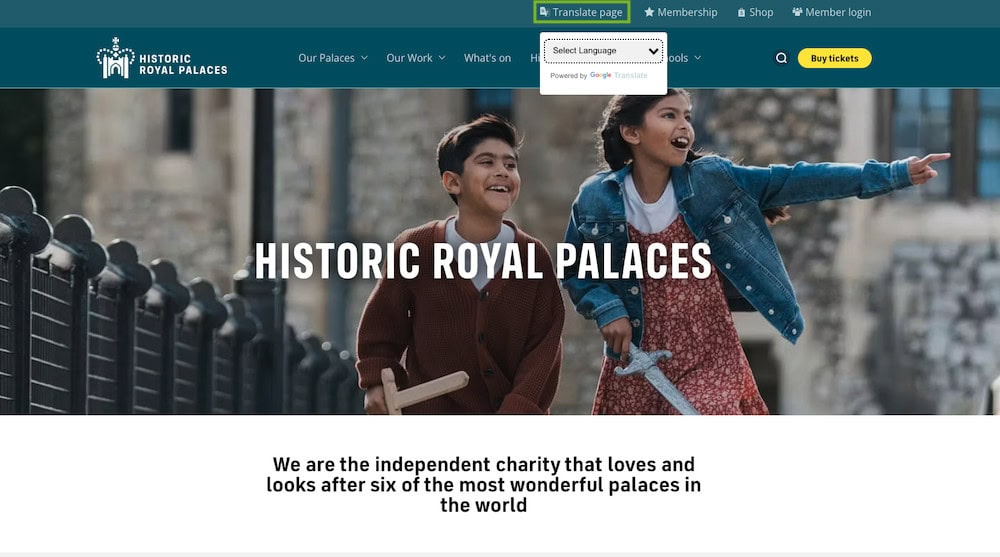
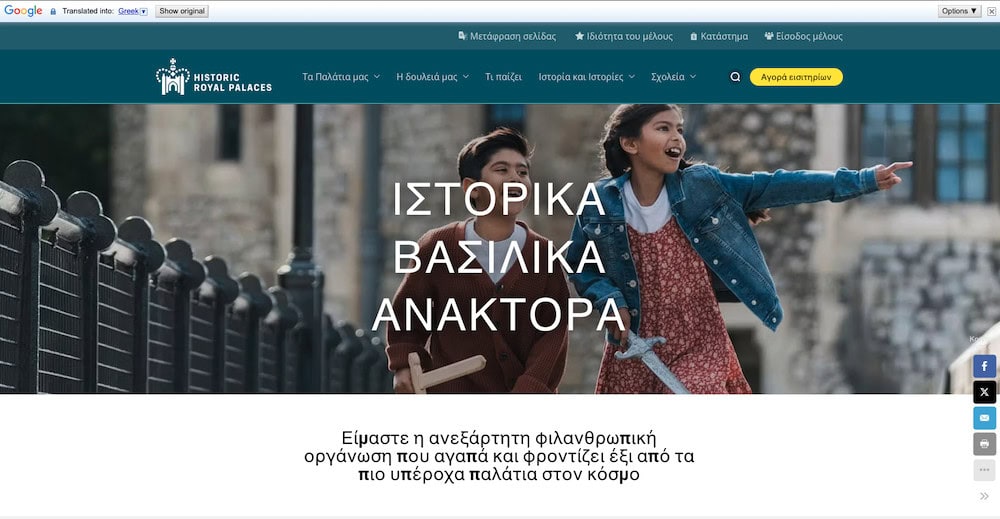
Historic Royal Palaces uses a more low effort option for handling multiple languages. They have the Google Translate integrated into their site.

This simply uses Google Translate to update the content on the page. This is functionality that is already built into the Chrome browser.

However, the widget isn’t an option available to all businesses, as it was discontinued for commercial use back in 2019. It was brought back in 2020 for a limited number of non-commercial users, like non-profits.
Commercial users have to use the Google Cloud Translation API.
Whilst Google Translate is one option for adding automated multi-language functionality to a site, we often recommend the Weglot plugin for those after a quick and efficient automated solution. It is a good way for smaller businesses to quickly and cost-effectively implement translations, at least in the short term, without having to integrate Google’s API.
However, machine automated translations like this are not good with context, nuance and local idioms. So whilst this option can be a starting point, if you really want to connect with international visitors and avoid things getting lost in translations, an approach using native speaker translations is advisable. That is why we recommend WPML to most of our clients.
3. Booking.com
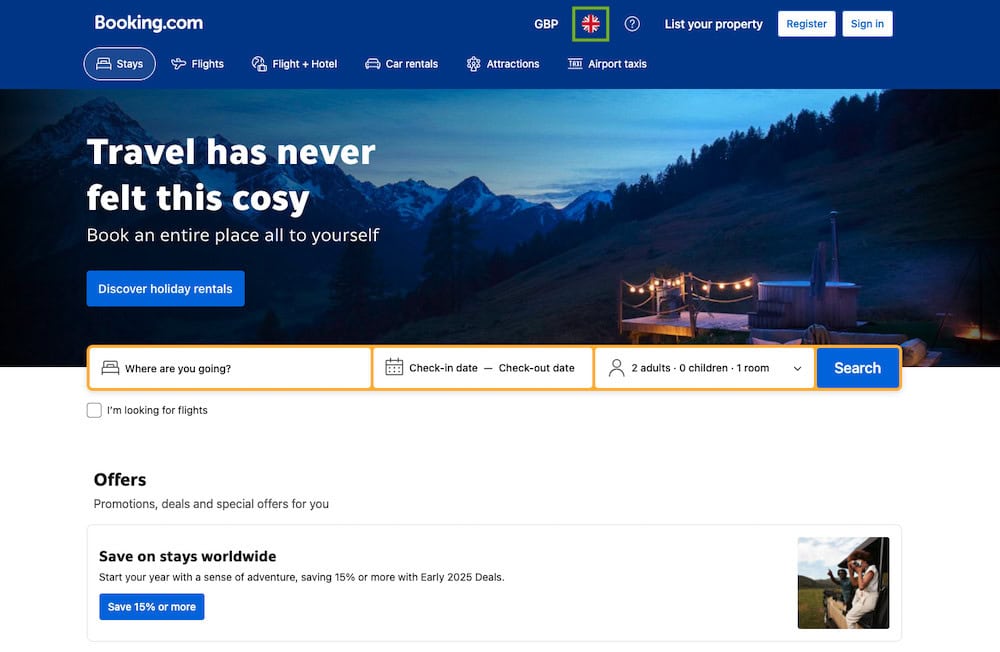
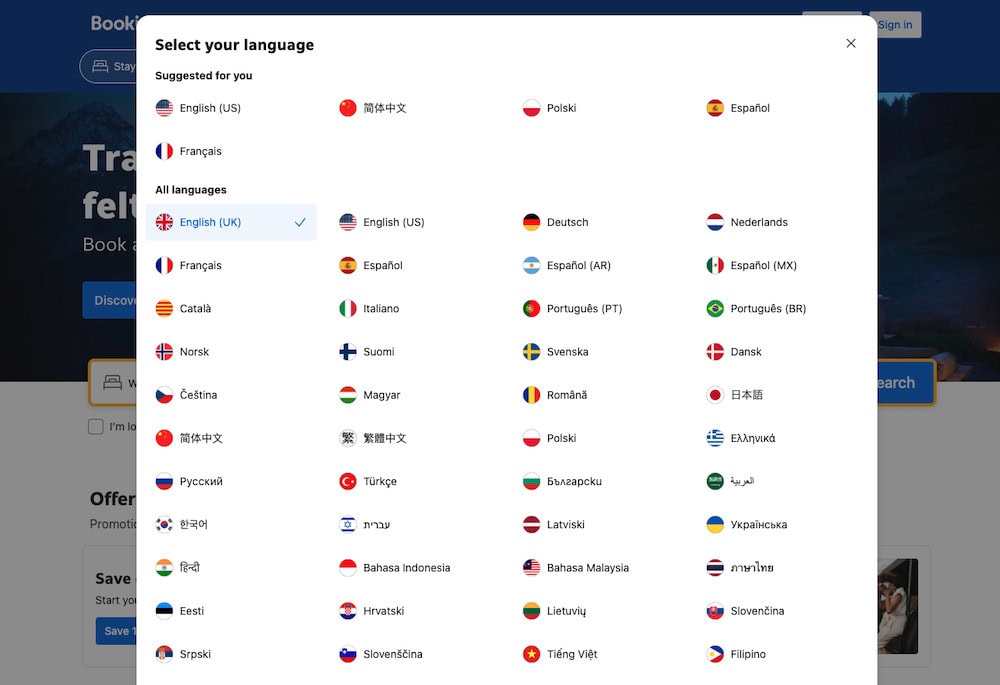
Similar to Marriott, Booking.com provides are language switcher at the top of the page.

This opens a large dropdown, where you can select your chosen language. It slightly differs to Marriott, as the language names are accompanied by flag icons, to aid in selecting the correct language faster.

Selecting your language translates the content on page, however, there is no additional localisation in terms of imagery or unique content.
Bakels Group
Bakels Group are a global bakery ingredients manufacturer.
With WordPress Multisite and WPML, we built them a suite of over 25 localised sites for the numerous countries they operate in.
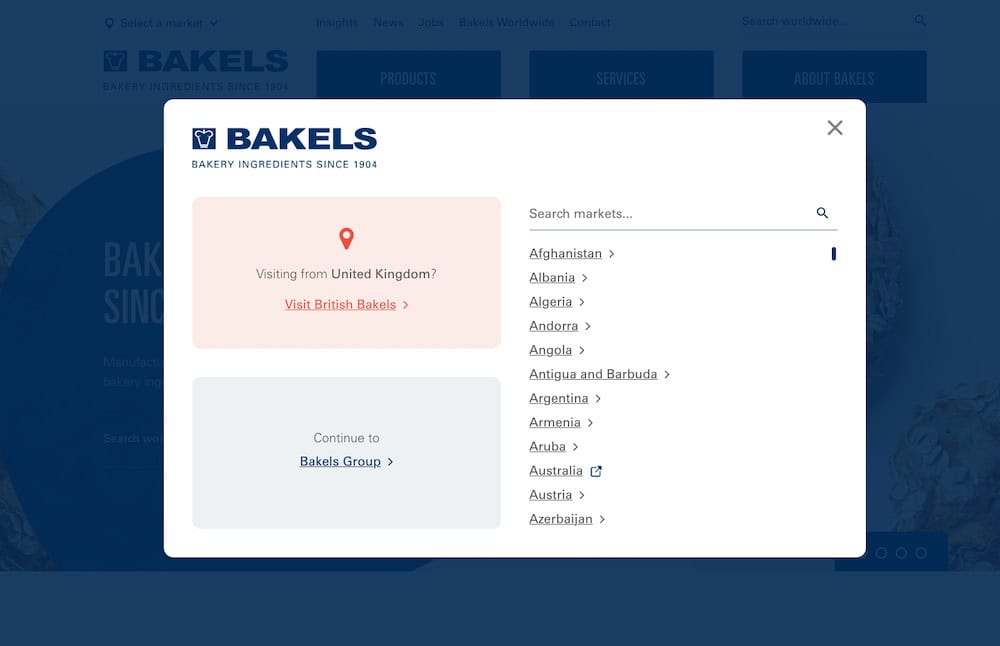
The site uses the browser to detect the user’s location and asks them if they wish to continue to their local site, or choose one of the others. This means that someone from the USA visiting Bakels on the web whilst on holiday in Norway, will still be able to choose the US site for if they want to.

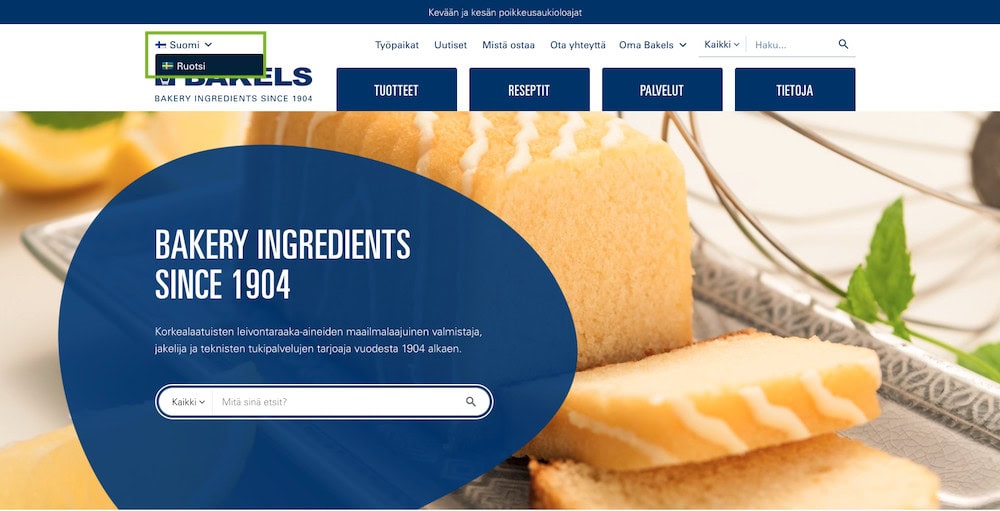
Each of these sites is in the local language, and in some instances, the sites have multilingual options, for countries with more than one national language.

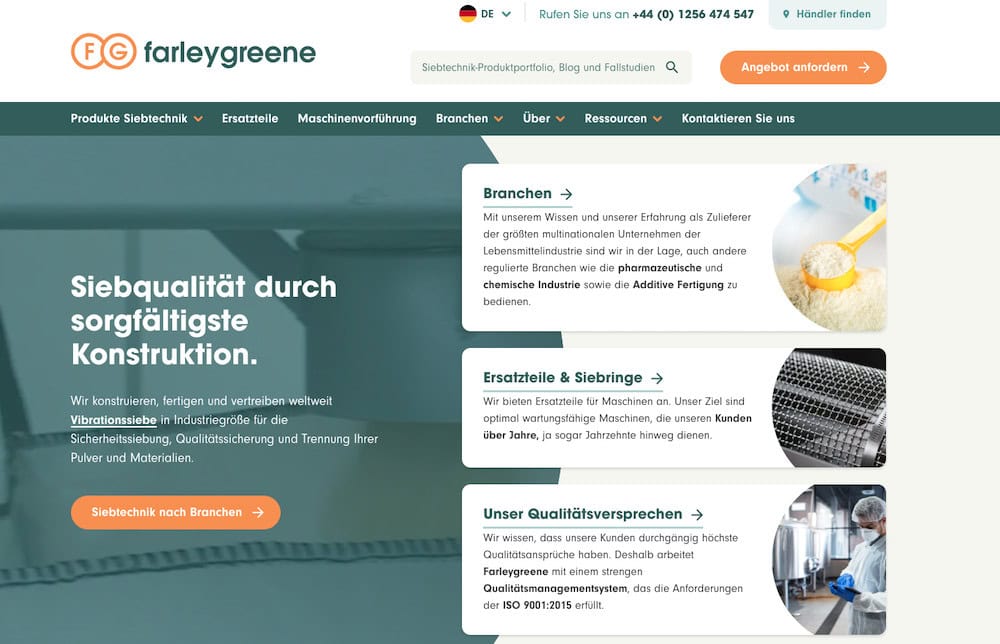
Farleygreene
Farleygreene is a designer, manufacturer, and global distributor of industrial-sized sieving machinery.
We built them a multilingual WordPress website using WPML, so that they could better service their core international markets.
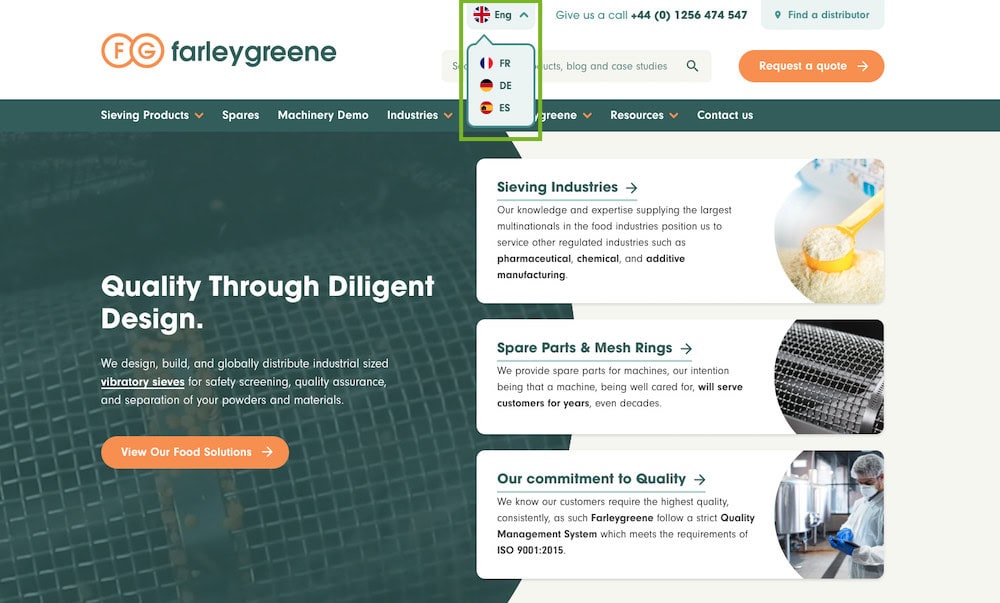
The site has a flag based language switcher at the top of the page, so users can quickly pick their language.

The switcher provides 3 additional languages, French, German and Spanish, for Farleygreene’s core markets.

At Impact Media, we have assisted global brands in designing and building multi-language websites, to help them operate in global markets.
Whether you run a hotel, restaurant, or event venue, we can help you create a platform that resonates with a global audience.
Let’s make your hospitality business truly international. Contact us today to get started!

Is It Time For A Website Redesign?
If you’d like to learn more about our website redesign approach and if it could be a good fit for your business, drop us an email or give us a call.