
logo

WordPress Design Agency

020 3355 8747

Message Us
  • Home
  • About Impact®
    Learn More About Impact Media®
    • Meet The Team
       
    • Why WordPress
       
    • Careers
       
    • Giving Back
       
    • 100K Tree Challenge
       
    James Coates
    Schedule a discovery call with UX Specialist James
    Book A Call
  • WordPress Services
    Learn More About Our Services
    • WordPress Web Design
       
    • UX Design
       
    • WordPress Development
       
    • WordPress Support & Maintenance
       
    • WordPress Evolve Retainer
       
    • WordPress Multisite Development
       
    • WooCommerce
       
    • Replatform To WordPress
       
    • WordPress Consultancy
       
    • Integrations & Plugins
       
    • WordPress Managed Hosting
       
    • WordPress Health Check
       
    James Coates
    Schedule a discovery call with UX Specialist James
    Book A Call
  • Our Process
  • Case Studies
  • Insights
  • Contact Us
WordPress Design Agency
020 3355 8747
logo logo
Book A Call
Back
Menu
  • Home
     
  •  
    About Impact Media
    Learn More About The Impacters
    • Meet The Team
       
    • Why WordPress
       
    • Careers
       
    • Giving Back
       
    • 100K Tree Challenge
       
  •  
    Our Services
    Discover How We Can Help
    • WordPress Web Design
       
    • UX Design
       
    • WordPress Development
       
    • WordPress Support & Maintenance
       
    • WordPress Evolve Retainer
       
    • WordPress Multisite Development
       
    • WooCommerce
       
    • Replatform To WordPress
       
    • WordPress Consultancy
       
    • Integrations & Plugins
       
    • WordPress Managed Hosting
       
    • WordPress Health Check
       
  • Our Process
     
  • Case Studies
     
  • Insights
     
  • Contact Us
     
020 3355 8747
Mon - Fri • 9am - 5pm
Close

Oops! We could not locate your form.

Home / Insights / 4 Ways to Leverage the Psychology of Colour in Web Design
Back

4 Ways to Leverage the Psychology of Colour in Web Design

Published 13.04.23
13th April 2023
Last Updated 14.09.26
14th September 2026

Newer
8 Min Read
Joe Dawson
Joe Dawson
Web Design
Older
8 Min Read
 
Joe Dawson
Joe Dawson
 
Web Design

Colour psychology may sound like a theoretical concept, but its impact is felt in every part of your website design. Learn about the nuances of this neuroscientific concept, and how you can apply the most important takeaways to your own website.
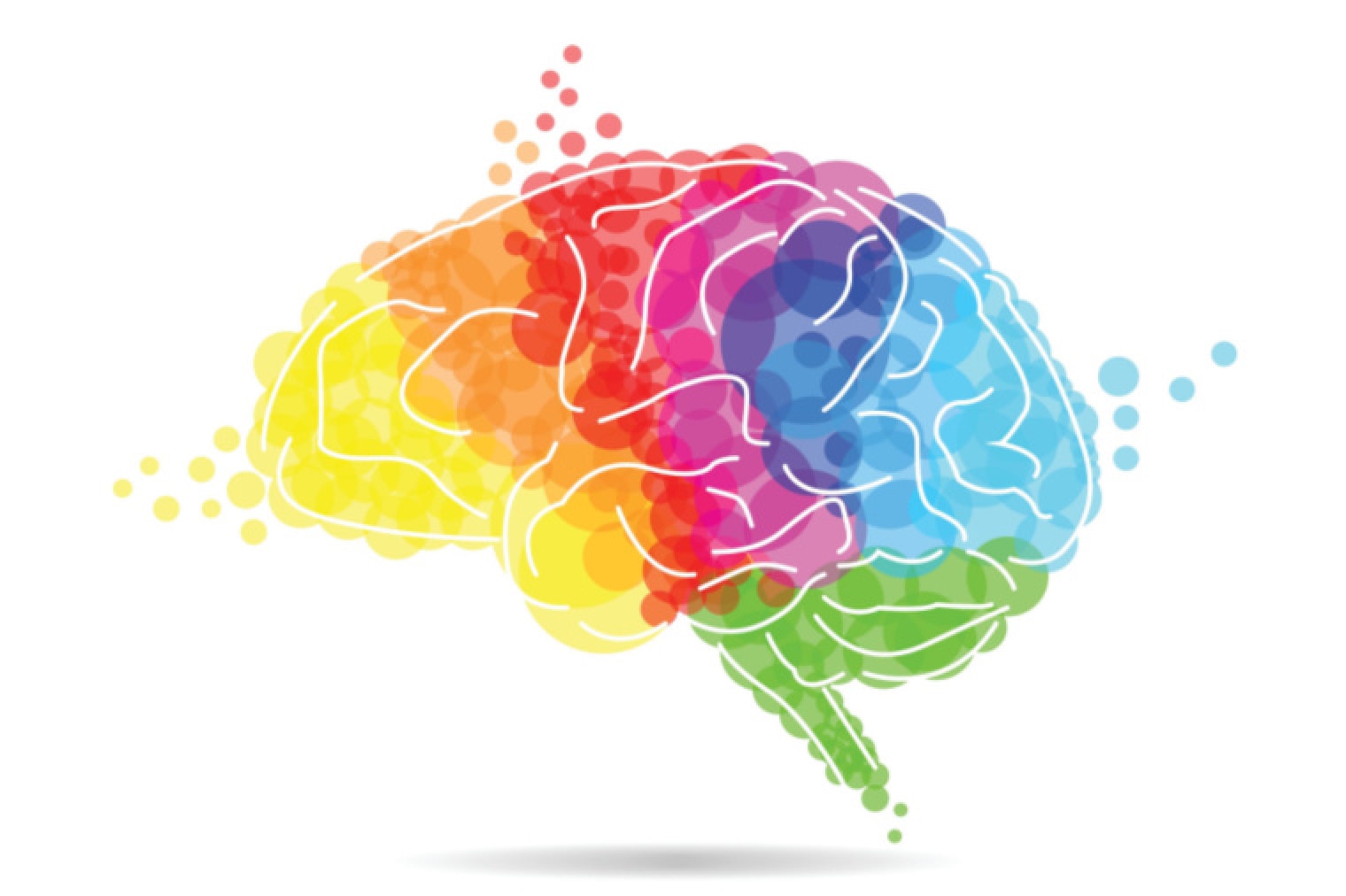
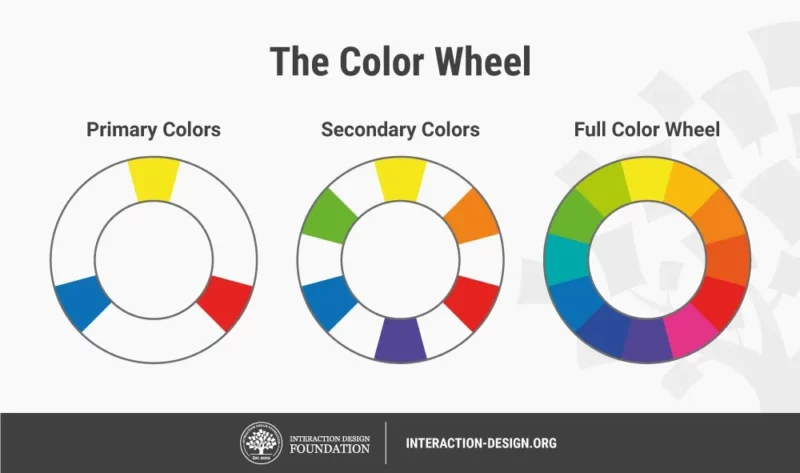
Illustration of a colourful brain blog hero image.

Sometimes, seemingly small decisions can have a significant impact on the way your audience perceives your products or brand. Even a slightly adjusted colour on one of your call-to-action buttons can change your conversion rate.

The reason goes beyond mere marketing and web design principles to the reason behind those principles. All marketing and persuasion is ultimately based on psychology, looking to appeal to different parts of our audience’s minds. 

That’s where colour psychology enters the equation. A well-researched psychological concept, it can make all the difference in building a more persuasive and engaging website. Let’s dig into the nuances of the concept, how it applies to web design, and how you can use that knowledge to influence user behaviour while improving UX.

Colour Psychology Explained

At its most fundamental, colour psychology describes the study of how our brains perceive colours, the meaning we attach to those colours, and how that meaning impacts our behaviour.

Generally speaking, there are three layers of meaning we tend to attach to every colour we encounter: 

  1. Universal meaning, or the elements of a colour everyone can agree on. For example, yellow (due to its association with the sun) tends to convey light and warmth.
  2. Cultural meaning, or the elements of a colour that the groups we associate with have assigned to them. For example, white in Western culture stands for innocent, while in many Asian cultures, it represents death.
  3. Personal meaning, or the elements of colour that our own experience has assigned with them. For example, though red typically stands for power and aggression, someone who has been consistently exposed to it in calming environments may come to associate it with that emotion.

These three layers form a complex mechanism by which we interpret colours. In fact, studies repeatedly show that exposure to different colours can affect our mood. For example, white-coloured pills are associated with greater pain relief, while athletes in black-coloured uniforms are more likely to receive penalties.

6 Basic Colour Meanings 

Of course, understanding colour psychology only matters if you understand what the individual colours you’re considering for your website actually mean. As mentioned above, those meanings can change drastically based on both cultural and personal influences. That said, experts have arrived at relatively consistent colour meanings in Western culture based on a wide range of research:

  1. Red creates a sense of urgency, power, energy, and passion. It’s also frequently used in messaging looking to generate excitement and youthfulness.
  2. Blue stands for loyalty, trust, and dependability. It’s the world’s favourite colour in part because it conveys a sense of calm, though it might not be as effective in prompting action.
  3. Yellow conveys optimism, warmth, and happiness. It stimulates the brain to make us feel more enthusiastic, creating a strong (and positive) impulse to act.
  4. Green is typically associated with health and nature. Its associations with growth, freshness, and prosperity come from that association. The result is a naturally relaxing feeling for anyone encountering it. 
  5. Black creates a feeling of power, strength, and authority. Depending on the context, it can stand for intelligence and sophistication or sadness. It’s also the colour that most easily overwhelms your audience when overused.
  6. White reminds people of innocence, purity, and cleanliness. Used correctly, it can showcase the source as confident. When used strategically as a background, its clean-slate nature can induce creativity.

Keep in mind that these are generalisations. The exact ways in which these colours are used, as well as their potential combinations, are part of colour theory, which is a core concept for every designer. Still, the above is a good start to understanding how your audience will interpret any colours you put in front of them.

colour wheel
Colour Wheel graphic from Interaction Design Foundation

Why Colour Psychology Matters in Web Design

The psychological concept on which colour theory is based may be too in-depth to explain in a few hundred words, but studies repeatedly show just how much of an impact it can make.

According to one study, 93% of consumers decide whether or not they’ll buy a product based on its visual appearance. For nearly 85% of buyers, colour is a major deciding factor. Finally, 80% of consumers believe that colour is responsible for brand recognition.

Colour psychology has been well-studied enough to know the impact it can have on all consumers. That impact becomes even more significant when looking specifically at website behaviours. 

A landmark Google study found that users decide whether or not they like a website in only 0.05 seconds. That’s not nearly enough time to read anything on it or even recognise complex layout elements. It is, however, enough to see the primary colours on which your website is built, and make judgment and navigational decisions accordingly. 

How Colour Fits Into Broader Psychology-Based Design Concepts

Colour, of course, is not the only psychological concept that matters for web design. Instead, it’s part of a broader study that looks to understand just how human behaviours online are influenced by the underlying messaging the website tries to communicate. As one industry article puts it,

“At the heart of successful web design is emotion which, according to cognitive research, is a major factor in driving the decisions we make. The way a person feels about your brand manifests itself in the user experience, buyer journey and consumer loyalty. The need to humanise your brand is key in engaging your audience on that emotional level, and web design plays a huge role in doing just that.”

The same article points out a few elements of cognitive theory that are especially relevant in the online arena:

  • Cognitive load theory, which suggests that overstimulation through too much information can negatively impact decision-making. The key is to avoid choice paralysis through a simple, streamlined, uncluttered website.
  • Storytelling, which frames content in a structure that humans naturally understand and gravitate towards. Studies suggest that we are up to 22x more likely to remember facts wrapped in stories as opposed to simple stats and data.
  • The serial position effect, which suggests that users are more likely to remember both the first and last item in any list that includes three or more items.
  • The Von Restorff Effect, which states that in any grouping of relatively homogenous items, the one that’s different the most immediately stands out and leads to improved recall.
  • Colour psychology, as discussed throughout this post.

Each of these concepts extends way beyond web design, but their underlying findings have important consequences for web design and user experience. Following them can help you build a more persuasive and intuitive online presence designed to engage and convert your users.

4 Ways to Use Colour for Influencing Web Behaviour and Improving UX

So much for the theory. Colour psychology and its web design benefits, along with neuroscience in general, are backed by an immense amount of credible research, but those findings only matter if they can make a tangible impact on your business. These four ways help you get started in applying theoretical concepts to your own website.

1. Align Your Colours With Your Brand Personality and Industry

The first step always has to be choosing colours that make sense for you. Based on the multi-layered meaning of individual colours, choose options that align with your brand values and personality. Keep your industry in mind too. For example, many financial institutions intentionally use blue as a brand colour because of its implications on reliability and trust.

2. Leverage Colour to Improve Your Website CTAs

Perhaps the most important piece of your website impacted by colour choices is your call-to-action buttons. The right colour allows them to stand out, while also encouraging your users to action. There is no perfect colour for CTA buttons, but the urgency of red and the impulse suggestion of yellow can both prompt users to action.

3. Consider Colour in Your Website Images

Don’t limit your colour choices to the background and design elements of your website. The way you present your images, from hero all the way to individual product shots, matters just as much. For example, the background of a product image can suggest anything from power and strength to natural beauty or innocent simplicity.

4. Think Beyond Individual Colours to the Larger Presence

Finally, never consider colours in isolation. Your audience won’t spend the time separating the background and foreground colours to assign individual meanings. Instead, the combination of all of your colours and visuals matters most. An eye on the bigger picture is crucial as you build a website specifically designed for a positive UX that prompts action.

Summary

It’s difficult to overstate just how important colour can be to improve your website UX and prompt web visitors to action. But of course, colour psychology is only one of the concepts that matter as you build and improve your online presence.

Explore our blog for more insights on web design and development that can benefit your business, or contact us for a conversation about a potential partnership to build and optimise your website. 

Share Socially
Joe Dawson
Joe Dawson
Head of Digital
Joe is Head of Digital at Impact. His expertise are UX and design, but he's also a highly experienced web developer. He's been designing and building websites since he was at school. These days he likes to attend as many WordPress conferences as possible, to continuously expand his skills.
View Team Profile
See More Articles
Joe Dawson
Joe Dawson
Head of Digital
Joe is Head of Digital at Impact. His expertise are UX and design, but he's also a highly experienced web developer. He's been designing and building websites since he was at school. These days he likes to attend as many WordPress conferences as possible, to continuously expand his skills.
See More Articles
View Team Profile
Want more control over
how you manage content in WordPress?
Edit content that was previously restricted and get creative with building pages in WordPress.
Let's Chat
studio@impactmedia.co.uk
020 3355 8747
Impact Media's LinkedIn
Impact Media's Twitter
Impact Media's Facebook
Impact Media's Instagram
Impact Media's Youtube
wordpress.org

About Impact

  • About Impact Media®
  • Meet The Impact Team
  • Why WordPress?
  • Our Web Development Process
  • Careers
  • Awards
  • Partners
  • Giving Back
  • 100K Tree Challenge

WordPress Services

  • WordPress Web Design
  • UX Design
  • WordPress Development
  • WordPress Evolve Retainers
  • WooCommerce Development
  • Multisite WordPress
  • Migrate To WordPress
  • Custom Integrations & Plugins
  • WordPress Consultancy

WordPress Support

  • WordPress Support & Maintenance
  • WordPress Managed Hosting
  • Case Studies
  • Insights
  • Contact Us

Addresses

London Address:

50 Liverpool Street,

London, EC2M 7PY, UK

+44 (0) 20 3355 8747


Registered Address:

Woodland Place, Hurricane Way

Wickford, SS11 8YB, UK

  • Privacy Policy
  • Cookie Policy
Impact Media logo
© Impact Media® 2003 - 2026
Impact Media is a trading name of IMDMS LTD. Company Reg. 05970261
Impact® & Impact Media®
are registered trademarks of IMDMS LTD