
logo

WordPress Design Agency

020 3355 8747

Message Us
  • Home
  • About Impact®
    Learn More About Impact Media®
    • Meet The Team
       
    • Why WordPress
       
    • Careers
       
    • Giving Back
       
    • 100K Tree Challenge
       
    James Coates
    Schedule a discovery call with UX Specialist James
    Book A Call
  • WordPress Services
    Learn More About Our Services
    • WordPress Web Design
       
    • UX Design
       
    • WordPress Development
       
    • WordPress Support & Maintenance
       
    • WordPress Evolve Retainer
       
    • WordPress Multisite Development
       
    • WooCommerce
       
    • Replatform To WordPress
       
    • WordPress Consultancy
       
    • Integrations & Plugins
       
    • WordPress Managed Hosting
       
    • WordPress Health Check
       
    James Coates
    Schedule a discovery call with UX Specialist James
    Book A Call
  • Our Process
  • Case Studies
  • Insights
  • Contact Us
WordPress Design Agency
020 3355 8747
logo logo
Book A Call
Back
Menu
  • Home
     
  •  
    About Impact Media
    Learn More About The Impacters
    • Meet The Team
       
    • Why WordPress
       
    • Careers
       
    • Giving Back
       
    • 100K Tree Challenge
       
  •  
    Our Services
    Discover How We Can Help
    • WordPress Web Design
       
    • UX Design
       
    • WordPress Development
       
    • WordPress Support & Maintenance
       
    • WordPress Evolve Retainer
       
    • WordPress Multisite Development
       
    • WooCommerce
       
    • Replatform To WordPress
       
    • WordPress Consultancy
       
    • Integrations & Plugins
       
    • WordPress Managed Hosting
       
    • WordPress Health Check
       
  • Our Process
     
  • Case Studies
     
  • Insights
     
  • Contact Us
     
020 3355 8747
Mon - Fri • 9am - 5pm
Close

Oops! We could not locate your form.

Home / Insights / What Is WCAG? A Look At Web Content Accessibility Guidelines
Back

What Is WCAG? A Look At Web Content Accessibility Guidelines

Published 01.03.23
1st March 2023
Last Updated 14.08.26
14th August 2026

Newer
8 Min Read
Vikki Baker
Vikki Baker
Web Design
Older
8 Min Read
 
Vikki Baker
Vikki Baker
 
Web Design

If looking at getting your website redesigned, you may have come across references to WCAG. But what is WCAG, why does it exist and why should you be aware of it before you choose your web development partner?

person using a screen reader

WCAG or Web Content Accessibility Guidelines are the set of guidelines created by W3C, that provides a global standard for web accessibility. Endeavouring to ensure that everyone creating content for the web, meets at least a set standard of accessibility for people with a range of disabilities, that impact the way they interact with the web.

Who Are W3C?

You might wonder why W3C gets to set the standard. It’s because setting web standards is what W3C was founded to do.

W3C, the World Wide Web Consortium, was originally founded by Tim Berners-Lee in 1994. Yes, that Tim Berners-Lee, the inventor of the World Wide Web. He remains the Director of WC3, which is an organisation dedicated to the continued development and definition of web standards, including those for web development. 

The consortium’s principles are grounded in creating an open web, that is secure and accessible for all.

The power of the Web is in its universality. Access by everyone regardless of disability is an essential aspect.

Tim Berners-Lee

Among the standards and guidelines they’ve developed that are used worldwide, are those for HTML, CSS, XML and the topic of this post, Accessibility.

The W3C Web Accessibility Initiative

Within W3C is the Web Accessibility Initiative (WAI), responsible for the development of web accessibility standards, along with supporting content and resources to help developers build accessible websites which meet those standards.

The standards they develop and maintain are:

  • WCAG (Web Content Accessibility Guidelines)
  • ATAG (Authoring Tool Accessibility Guidelines)
  • UAAG (User Agent Accessibility Guidelines)

Each concerns itself with a particular area of accessibility for development, of which WCAG covers web content. This includes text, imagery, and markup.

WCAG 2

The current WCAG standard in use is WCAG 2.2, finalised as a W3C recommendation in October 2023. In October 2025 it was also formally approved as an international standard, ISO/IEC 40500:2025, giving it additional legal and regulatory weight globally.

WCAG 2.0 was originally published in 2008, WCAG 2.1 followed in 2018, and 2.2 built on both with 9 additional success criteria, largely addressing cognitive accessibility, mobile usability, and authentication.

Work is also underway on WCAG 3.0, a more significant overhaul that will eventually move away from the current A/AA/AAA pass/fail model. It is still in the early working draft stage as of 2026, and isn’t expected to become a finalised standard for several more years, so WCAG 2.2 remains the practical target.

Within the current standards, there are 3 levels denoted by A, AA & AAA. These are their ‘success criteria’ and can be tested with their validation tools. All are successes, but the levels represent the degree to which a website follows the guidelines. An accessibility rating.

What Areas Of Accessibility Are Covered By WCAG?

As mentioned previously, WCAG provides guidelines and standards for accessibility in relation to content. Text, imagery and so on.

It provides instruction on how to make website content for users with a range of disabilities, and those using assistive technologies, like screen readers. The idea is to ensure that anyone using your website can access the same information with ease.

Areas covered include things like:

  • Colour and contrast
  • Text and image sizing and spacing
  • Correct use of labelling and headings for assistive devices
  • Audio and video descriptions and captioning
  • Animations and interactions and preventing flashing
  • Navigation
  • Inputs and gestures
  • Language complexity

Their quick reference guide can be found here and shows you some of the techniques and requirements to meet in order to comply with WCAG standards. You will notice that each of the criteria also has one of the accessibility rating levels next to it (A, AA, AAA). This is to give clear guidance on what must be achieved to successfully meet each of the levels.

Why Do These Rating Levels Matter?

For most organisations, these ratings are just a guide. A standard to aim for as a starting point for creating and managing an accessible website.

Finding a partner that designs and develops accessible websites is something it is wise to have on your checklist when searching for a website agency. So knowing if they build to meet WCAG standards is useful to know.

Some organisations, however, due to their nature, have an internal or legal requirement to have websites that meet a particular WCAG rating. These are primarily public sector websites.

For example, a government or charitable organisation may have to ensure that its website meets AA at the very least.

Requirements & Reasoning

Whilst most private organisations in the UK aren’t required to meet certain accessibility standards, you’d be silly not to provide an accessible and easy-to-use website. Building a website that isn’t fully accessible to a potentially sizeable portion of your audience is not only poor form, but poor business sense.

Alienating Your Audience

Current statistics suggest that 24% of the UK population report having a disability. That includes me. 23% of working-age people, and 45% of pension-age people. With an ageing population and later retirement age, these numbers will only grow.

A website built without accessibility in mind, when accessibility is just part of providing a good user experience, is doomed to alienate a large section of users.

Why would you overlook such a large portion of your target audience by building sites that aren’t easily accessible for users with a range of needs and abilities? What could that represent in lost business?

There are estimates that in the UK alone, the loss to businesses from not adequately meeting the needs of those with disabilities is over £2 billion!

If that isn’t reason enough, providing an accessible website, is future-proofing it for changes in legislation and to search engine algorithms.

Web Accessibility Lawsuits

Web accessibility has been the topic of several lawsuits in the US, resulting in big fines. As a result, businesses in the US tend to take web accessibility far more seriously.

The cross-pollination between the US and the UK is high, and we could find ourselves with similar cases arising here, and legislation changes requiring all websites to meet certain accessibility standards.

For example, the European Accessibility Act came into force in June 2025, requiring many products and services sold in the EU to meet accessibility standards.

Google & Organic Search

As I already alluded to, accessibility shouldn’t be considered as a separate entity to UX, as that suggests an otherness. It should just be a natural part of good usability partnered with quality web development.

It seems that Google is in agreement. We know that user experience is already an important factor in how their algorithm assesses a website and ranks content.

The inclusion of accessibility reports in tools like Lighthouse clearly demonstrates that accessibility is also on Google’s radar.

It makes sense that in future, accessibility will form part of the signals and factors with which they rank pages in search. Google hasn’t introduced accessibility as an explicit ranking factor, but the overlap keeps growing. Well structured, accessible content(clear headings, descriptive text, logical navigation) tends to be exactly what performs well in AI Overviews and other AI generated search summaries, so the practical incentive to build accessibly keeps increasing even without a formal algorithm signal.

Next Steps

If you’d like to learn more about digital accessibility in general, I recommend checking out the A11y Project.

If you’re considering a website redesign or a new website, Impact Media build WordPress websites to WCAG 2.2 A as standard, and higher where required. Get in touch and we can chat about your project requirements and whether we could be a good fit.

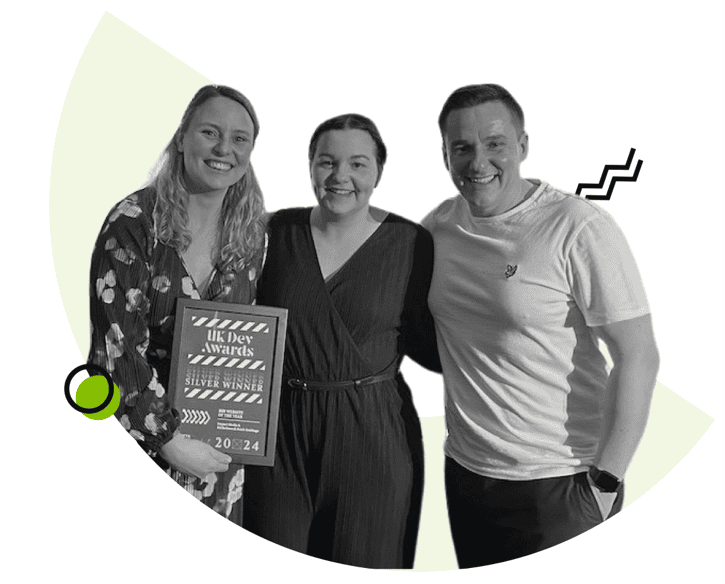
Impact team at UK Dev Awards

Is It Time For A Website Redesign?

If you’d like to learn more about our website redesign approach and if it could be a good fit for your business, drop us an email or give us a call.

Share Socially
Vikki Baker
Vikki Baker
Digital Marketing Manager, Cat Lady & Former Female Indiana Jones
Vikki has over 15 years of experience in Digital Marketing for WordPress specialist agencies. She loves WordPress for its simplicity of use, huge flexibility, and how great it is for SEO.
View Team Profile
See More Articles
Vikki Baker
Vikki Baker
Digital Marketing Manager, Cat Lady & Former Female Indiana Jones
Vikki has over 15 years of experience in Digital Marketing for WordPress specialist agencies. She loves WordPress for its simplicity of use, huge flexibility, and how great it is for SEO.
See More Articles
View Team Profile
Want more control over
how you manage content in WordPress?
Edit content that was previously restricted and get creative with building pages in WordPress.
Let's Chat
studio@impactmedia.co.uk
020 3355 8747
Impact Media's LinkedIn
Impact Media's Twitter
Impact Media's Facebook
Impact Media's Instagram
Impact Media's Youtube
wordpress.org

About Impact

  • About Impact Media®
  • Meet The Impact Team
  • Why WordPress?
  • Our Web Development Process
  • Careers
  • Awards
  • Partners
  • Giving Back
  • 100K Tree Challenge

WordPress Services

  • WordPress Web Design
  • UX Design
  • WordPress Development
  • WordPress Evolve Retainers
  • WooCommerce Development
  • Multisite WordPress
  • Migrate To WordPress
  • Custom Integrations & Plugins
  • WordPress Consultancy

WordPress Support

  • WordPress Support & Maintenance
  • WordPress Managed Hosting
  • Case Studies
  • Insights
  • Contact Us

Addresses

London Address:

50 Liverpool Street,

London, EC2M 7PY, UK

+44 (0) 20 3355 8747


Registered Address:

Woodland Place, Hurricane Way

Wickford, SS11 8YB, UK

  • Privacy Policy
  • Cookie Policy
Impact Media logo
© Impact Media® 2003 - 2026
Impact Media is a trading name of IMDMS LTD. Company Reg. 05970261
Impact® & Impact Media®
are registered trademarks of IMDMS LTD