Can’t See Your Website Changes? Here’s the Fix
Explaining browser caching, and how you can clear it quickly to see your website updates.
Oops! We could not locate your form.
Explaining browser caching, and how you can clear it quickly to see your website updates.
You’ve asked us to update your website. We’ve made the changes, but when you go and look at the updates, nothing’s different.
The problem is almost always your browser cache, and it takes 10 seconds to fix.
For instructions on how to quickly clear your browser cache, scroll down, but if you’d like to know more about what browser caching is, read on.
Browser caching is a mechanism that allows web browsers to store copies of website resources like images, stylesheets, JavaScript files, and other assets on a user’s local device. To learn about other types of caching used on the web, check out this post.
When someone visits a website for the first time, their browser downloads all the necessary files to display the page correctly. With caching enabled, the browser saves these files locally rather than discarding them. So when the user returns to the same website or navigates to another page on the site, the browser can retrieve these stored files from the local cache instead of downloading them again from the server.
The primary purpose of browser caching is to improve website performance and user experience. By serving cached files from the user’s device, pages load significantly faster on subsequent visits, reducing wait times and making the browsing experience feel more responsive.
This also reduces the amount of data that needs to be transferred over the network, which is particularly beneficial for users on slower internet connections or mobile data plans.
From a website owner’s perspective, caching reduces server load and bandwidth consumption, as the server doesn’t need to send the same files repeatedly to returning visitors. This can lead to cost savings and allows the server to handle more concurrent users efficiently.
The first thing to try is a hard refresh. Press these keys together while viewing your website:
| Windows | Mac | |
| Chrome | Ctrl + Shift + R | Command + Shift + R |
| Firefox | Ctrl + Shift + R | Command + Shift + R |
| Safari | – | Command + Option + R |
This forces your browser to reload the page fresh from the server, ignoring any stored files. In most cases, you’ll now see your updates.
If the hard refresh didn’t help, you’ll need to clear your browser cache. This sounds technical but takes about 30 seconds:
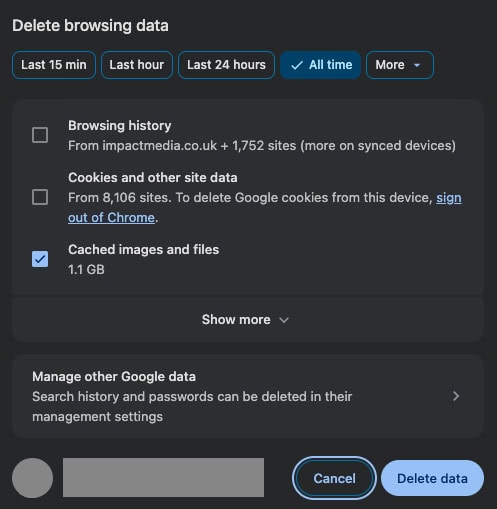
Chrome:

You can get to the same window by clicking menu (three dots ⋮) in the top-right corner of your browser window, and going to ‘Delete browsing data’.
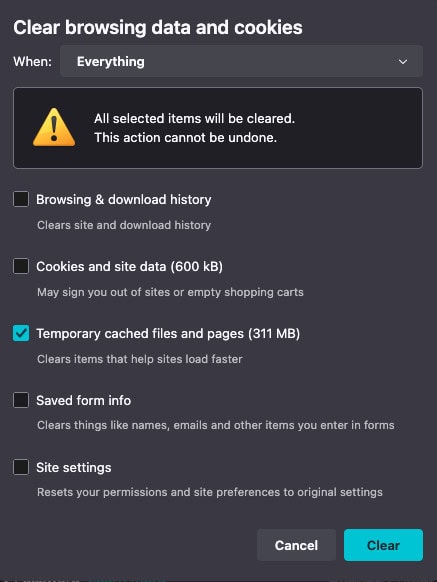
Firefox:

You can also get to this window by clicking the menu button (three horizontal lines) in the top right of the browser window, going to ‘Settings’, then to ‘Privacy and security’, scroll down to ‘Cookies and site data’ and then click the ‘Clear data button’.
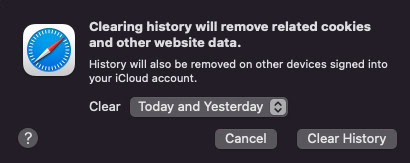
Safari:

This will however delete additional browsing data like recent searches and the history of web pages you visited.
As mentioned previously, our browsers save copies of website files (images, code, styles) so pages load
faster on return visits. This is helpful most of the time, but it means you sometimes see yesterday’s version of a page rather than today’s.
Clearing your cache simply deletes these saved copies. The next time you visit, your browser downloads everything fresh.
If you’ve tried both methods and still can’t see your updates, get in touch and we can investigate from our end.
Occasionally there are other caches and factors at play, such as: